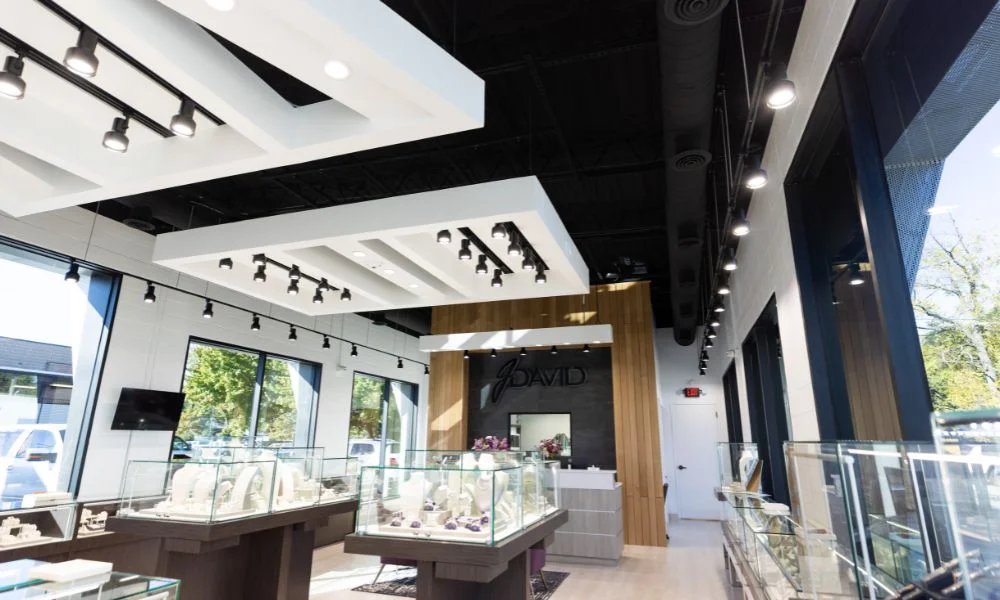
Broken Arrow | South Tulsa | Brookside

Explore the Collections

The J. David Legacy Collection 5,600+ pieces Some things are meant to outlast us. The J. David Collection 2,600+ pieces Where your forever takes shape.


Gabriel & Co. 7,500+ styles The ring you’ve imagined, finished by hands you can trust. A.Jaffe 1,000+ pieces A promise made to last as long as yours.

By Category

Shown at our three Tulsa showrooms. View All Collections →

At the Bench

Jewelry Repair On our own benches, wherever it came from. Ring Resizing For the ring that almost fits. Appraisals The document your insurer accepts.

Also at J. David

Custom Design If you can dream it, we can make it. Gold Buying & Trade Somewhere in your house there is a box. The Watch Concierge The watch you have been looking for is out there.

More Services

Handled in our own workshops, never sent out. View All Services →
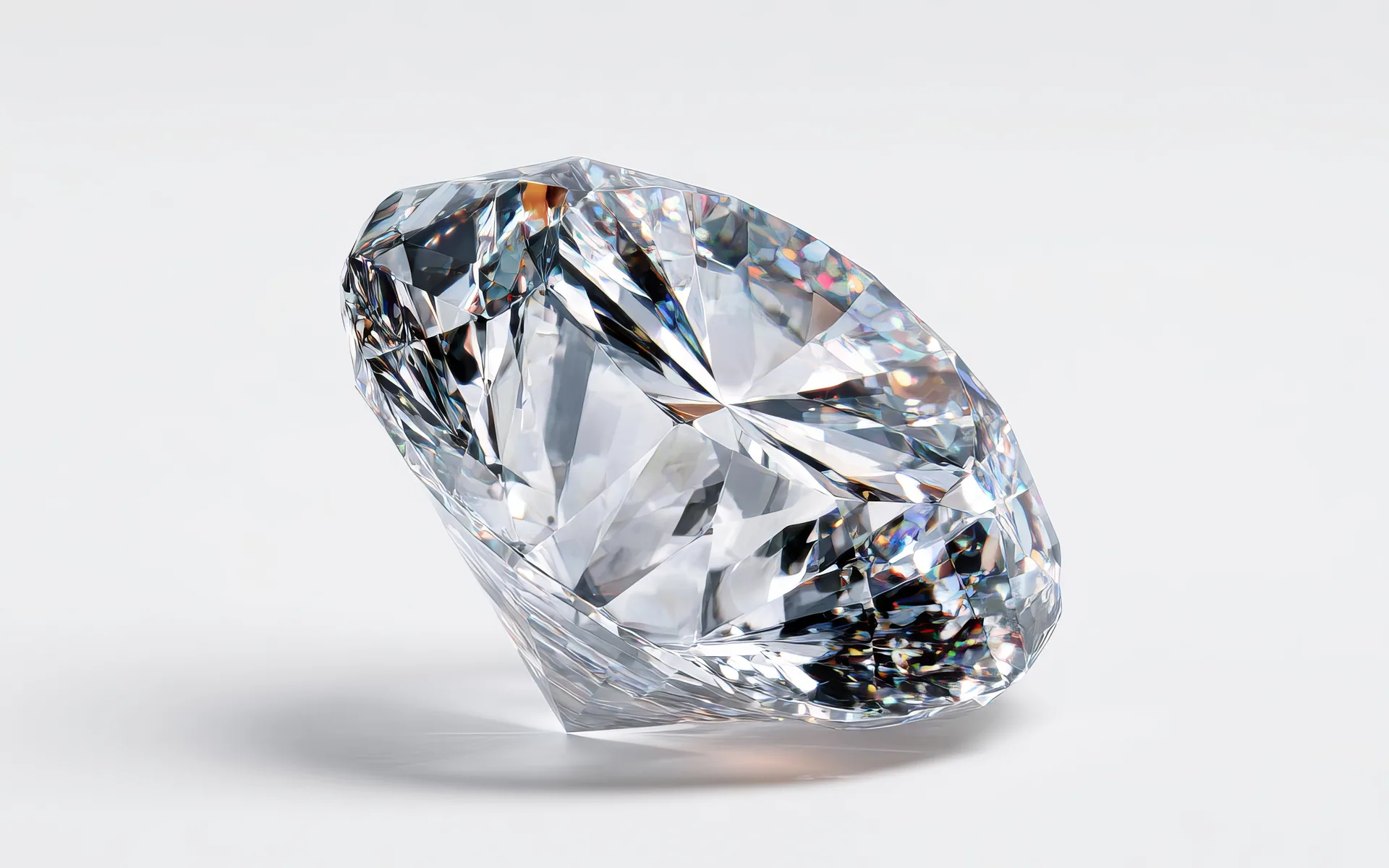
A loose round brilliant diamond resting on a white surface
The Journal · Diamond Buying Guides

The 4 Cs of a Diamond, Explained

Cut, color, clarity and carat. What each one means, which one your eye actually sees, and how to read the report that comes with a diamond.

Somewhere on a diamond's paperwork there are four small entries: cut, color, clarity, carat. Between them they decide what the diamond costs. Only some of them decide how it looks on a hand, across a dinner table, in the light of an ordinary Tuesday.

This is what each one means, in the order your eye would rank them.

Cut: the one your eye sees

Cut is not shape. Shape is the outline: round, oval, emerald, pear. Cut is how well the diamond was proportioned and faceted, and what it does with light.

A diamond cut too deep or too shallow lets light leak out through its sides and its base. A diamond cut well sends it back up through the top. That return is what you see as brightness, as flashes of color, and as the sparkle when a hand moves.

The Gemological Institute of America grades cut on a five-step scale, Excellent, Very Good, Good, Fair and Poor, and it does so only for round brilliant diamonds. An oval or an emerald cut receives no cut grade at all, which is one more reason to judge a fancy shape with your own eyes.

Cut is the one grade you can see from across the room.

Color: how white is white

The scale runs from D to Z. D has no color at all. Z has a light yellow or brown tint. The differences between neighboring letters are small enough that graders compare each diamond against master examples under controlled light.

Grades Called What you will see
D, E, F Colorless No color, even to a trained eye
G, H, I, J Near colorless White to most eyes once the diamond is set
K, L, M Faint A soft warmth, more visible in larger diamonds
N to Z Very light to light A visible yellow or brown tint

Beyond Z a diamond stops being "tinted" and becomes a fancy color, and the rules reverse: the stronger the yellow, pink or blue, the rarer it is.

The metal matters as much as the letter. Yellow gold lends its warmth to a diamond, so a near-colorless diamond looks white in it. A white setting shows a tint more plainly. Choose the two together.

Clarity: what the loupe finds

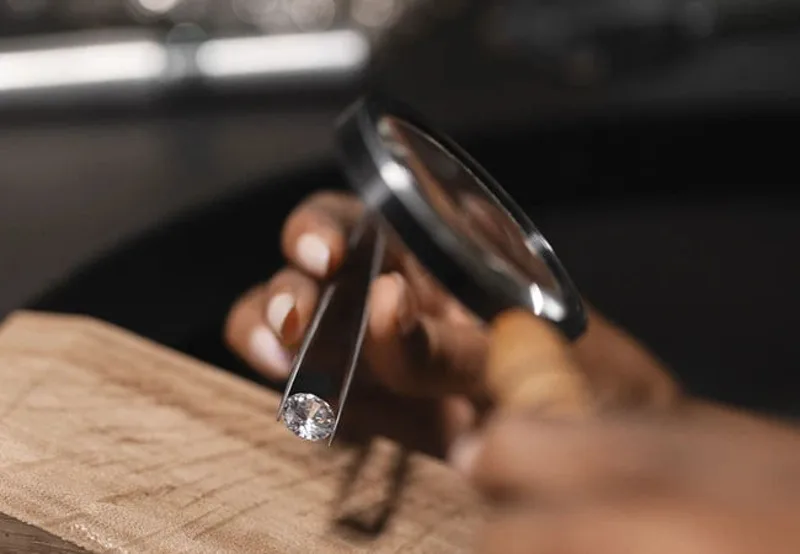
Almost every diamond carries small marks from its making. Clarity is the measure of how many, how large, and how easy they are to find at ten times magnification.

Grade Name What it means
FL Flawless Nothing visible at 10x, inside or out
IF Internally Flawless Nothing inside; only faint marks on the surface
VVS1, VVS2 Very, very slightly included Minute marks, very hard for a skilled grader to find
VS1, VS2 Very slightly included Minor marks, seen with effort at 10x
SI1, SI2 Slightly included Noticeable at 10x, sometimes without it
I1, I2, I3 Included Obvious at 10x; may affect brilliance

What matters on a hand is whether a diamond is eye-clean: nothing visible without the loupe. Many diamonds in the VS and SI grades are. The shape changes the answer. A round brilliant's busy facets hide small marks well. The long, open facets of an emerald cut show them, so clarity deserves more of the budget there.

Carat: weight, not size

One carat is 200 milligrams, divided into 100 points, so a 75-point diamond weighs three quarters of a carat. It is a weight and not a width. Two diamonds of the same carat can look different in size, because shape and proportion decide how much of that weight faces up.

Prices step up at the weights people ask for by name: the half carat, the carat, the two carat. A diamond just under one of those marks can look the same on the hand and cost noticeably less per carat. It is one of the few places in a diamond where there is something to be gained by knowing.

Reading the report

A diamond of any consequence comes with a report from an independent laboratory. It is the diamond's record, and it is worth five minutes of your attention before you fall in love.

Natural diamonds graded by the Gemological Institute of America carry all four grades as described here. Lab-grown diamonds are a different matter: since October 2025 the Institute describes eligible lab-grown diamonds as Premium or Standard, while IGI, another of the major laboratories, grades them on the 4 Cs. A lab-grown diamond is a diamond; it was simply born somewhere else. Just read the report from the laboratory whose name is on it.

What the paper cannot tell you

Four grades describe a diamond. They do not tell you which one makes your breath catch.

When the diamond is settled, How to Choose an Engagement Ring takes the rest of the decisions in order.

So come and look. We would rather put two diamonds side by side in your hand, under the same light, than ask you to take a letter's word for it. Bring the budget and the shape you have in mind to any of our three Tulsa showrooms, and we will show you what each of the four is worth to your own eyes.

Good Questions

Which of the 4 Cs matters most?

Cut. It decides how much light a diamond returns, and that light is what your eye reads as sparkle. A well-cut diamond looks brighter, and often larger, than a poorly cut diamond of the same weight.

Is cut the same as shape?

No. Shape is the outline, such as round, oval or emerald. Cut is how well the diamond is proportioned and faceted, and how it handles light. The Gemological Institute of America grades cut from Excellent to Poor, and only for round brilliants.

Do I need a D color diamond?

Not necessarily. D is the top of the scale, but the near-colorless grades, G through J, look white to most eyes once the diamond is set, especially in yellow gold. The metal you choose changes how the color reads.

What does eye-clean mean?

It means no inclusion can be seen without magnification. It is a practical description and not a grade, so it has to be judged diamond by diamond. Clarity grades are assigned at ten times magnification, which is closer than anyone will ever look at your ring.

Does carat tell me how big a diamond will look?

No. Carat is weight. One carat is 200 milligrams. Two diamonds of the same weight can look different in size, because shape and proportions decide how much of that weight shows from the top.

Are lab-grown diamonds graded the same way?

It depends on the laboratory. Since October 2025 the Gemological Institute of America describes eligible lab-grown diamonds as Premium or Standard instead of using its natural-diamond grades, while IGI grades lab-grown diamonds on the 4 Cs. Read the report from the laboratory named on it.

The Inner Circle

First look, before anyone else.

New pieces as they land, the evenings we open the doors after hours, and now and then a story from the bench.

Or begin your ring →
Visit a Showroom

See it in person.

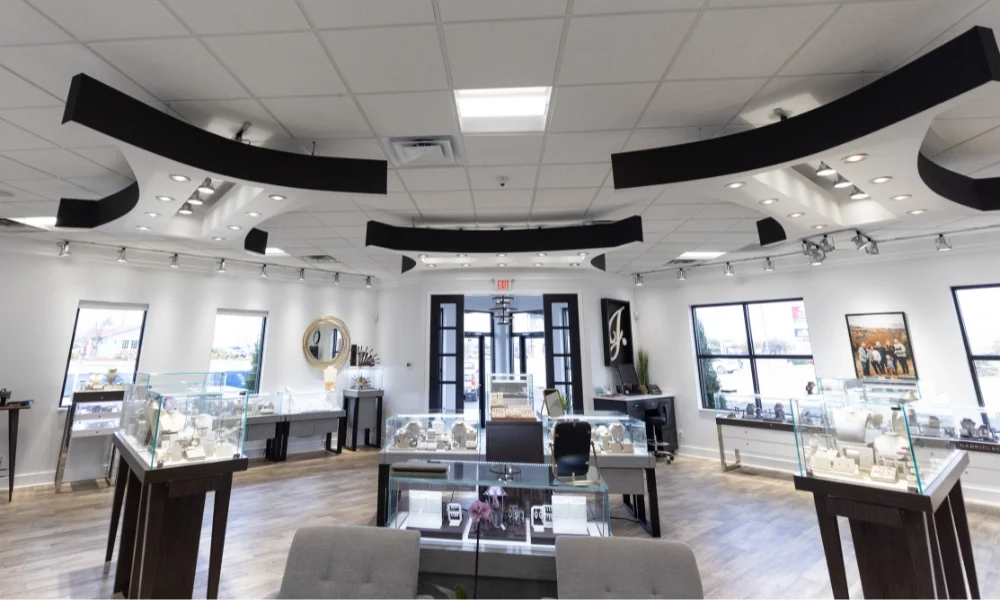
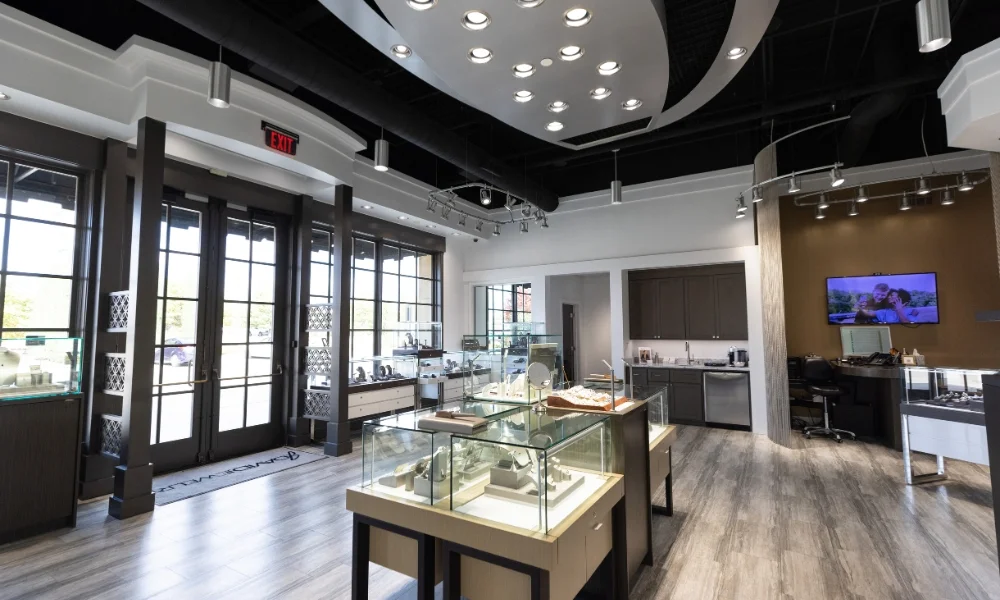
Three showrooms across Tulsa, one family since 1994. Bring your questions, or just come and look.

Verified on Google

In Their Own Words.

Every heirloom begins with a story. Hear from the families who let us be a part of theirs.

★★★★★ Trusted by Generations 5,300+ Five-Star Google Reviews
”

Katelyn helped me resize and refresh my wedding ring. She was knowledgeable, professional, and incredibly sweet. She made the experience easy and enjoyable, and I couldn’t be happier with the results. I highly recommend asking for Katelyn

★★★★★
Kim Coder
Broken Arrow · Google · Jul 2026
”

Had a fantastic experience at J David! Bought an engagement ring last year and a wedding band this year. Maelei and Susan were especially super helpful and patient with us and found us the perfect matches!

★★★★★
Matthew Thomas
South Tulsa · Google · Apr 2026
”

One big request I had for Hayley was to make sure any leftover gold from the ring was returned to me. Not only did she make sure I got the gold, but Scott even turned it into a small pendant!

★★★★★
Michael Reid
Brookside · Google · Aug 2026