 By Liz Sterling
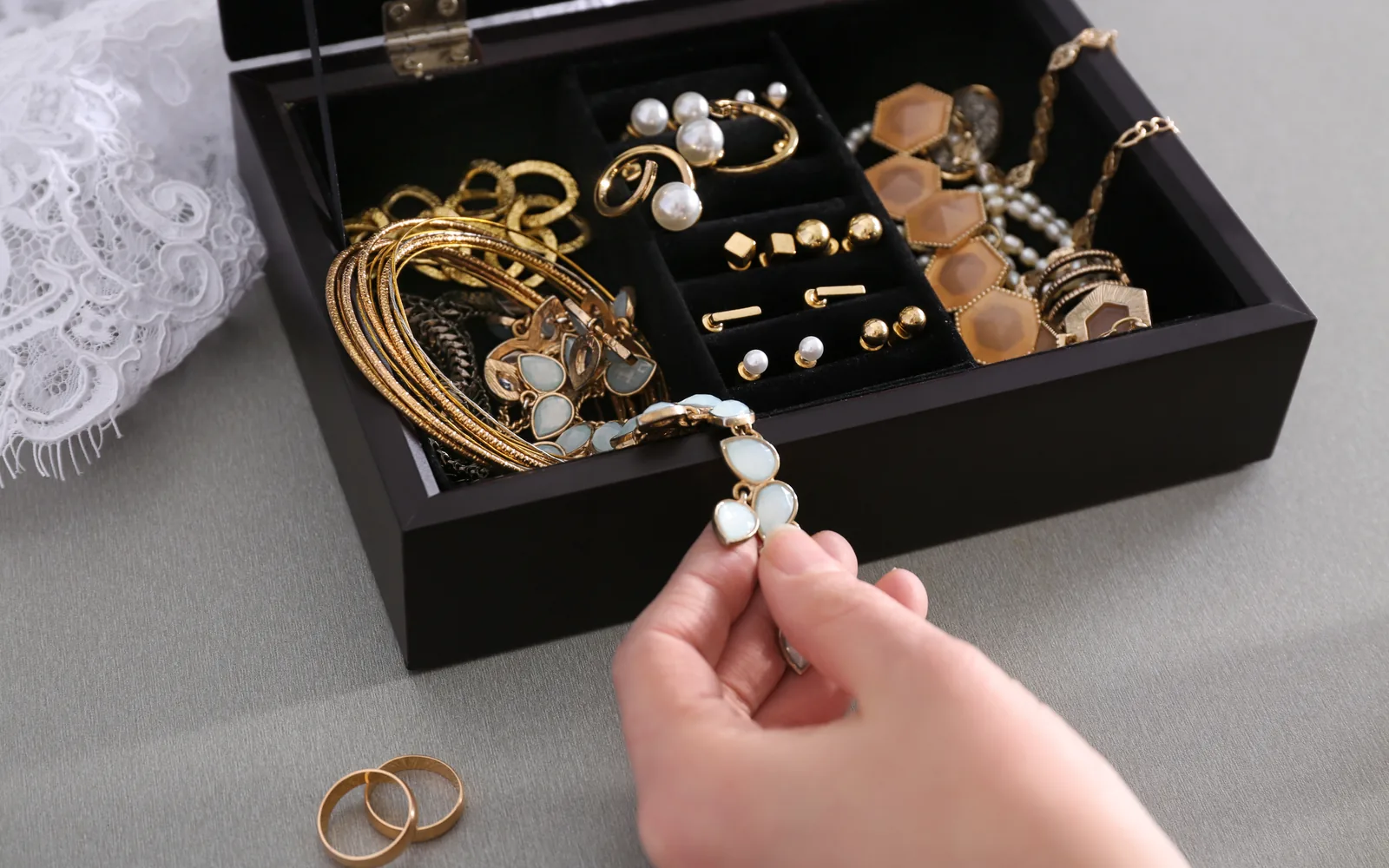
Somewhere in most houses there is a box. A chain that snapped and was never mended. One earring. A ring from a marriage, or from someone whose hands you still remember. None of it was thrown away, and that tells you something: it stopped being worn long before it stopped mattering.
It is still gold. It is still yours. And it is worth more than most people guess — sometimes as metal, sometimes as the piece it already is. Here is how we think about it, the way we would tell you with the box open between us.
Karat is a fraction, not a grade
Look inside the band of almost any ring and there is a small stamp. That number is a fraction out of 24. 14k is fourteen parts gold to ten parts other metals — about 58 percent gold. 18k is eighteen parts out of twenty-four, about 75 percent. 24k is pure gold, too soft for a ring meant to be lived in.
So 10k is not lesser gold and 24k is not better gold. They are different alloys made for different lives. A 10k ring is harder and forgives a working hand; an 18k ring is richer in color and gentler. For the question you came with, the stamp answers one thing only: how much of the piece is gold. How each karat wears on the hand is in Jewelry Metals: Gold, Platinum and the Rest.
| Stamp | Parts gold | Roughly |
|---|---|---|
| 10k | 10 of 24 | 42% gold |
| 14k | 14 of 24 | 58% gold |
| 18k | 18 of 24 | 75% gold |
| 22k | 22 of 24 | 92% gold |
| 24k | 24 of 24 | Pure gold |

Weight and karat set the floor
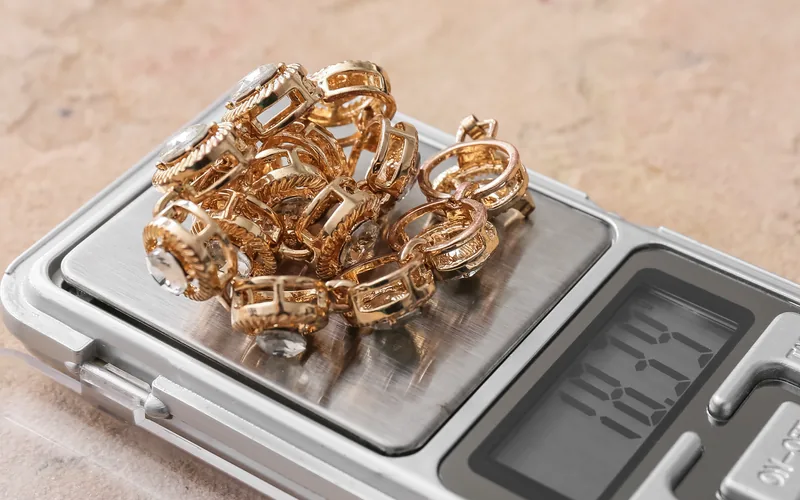
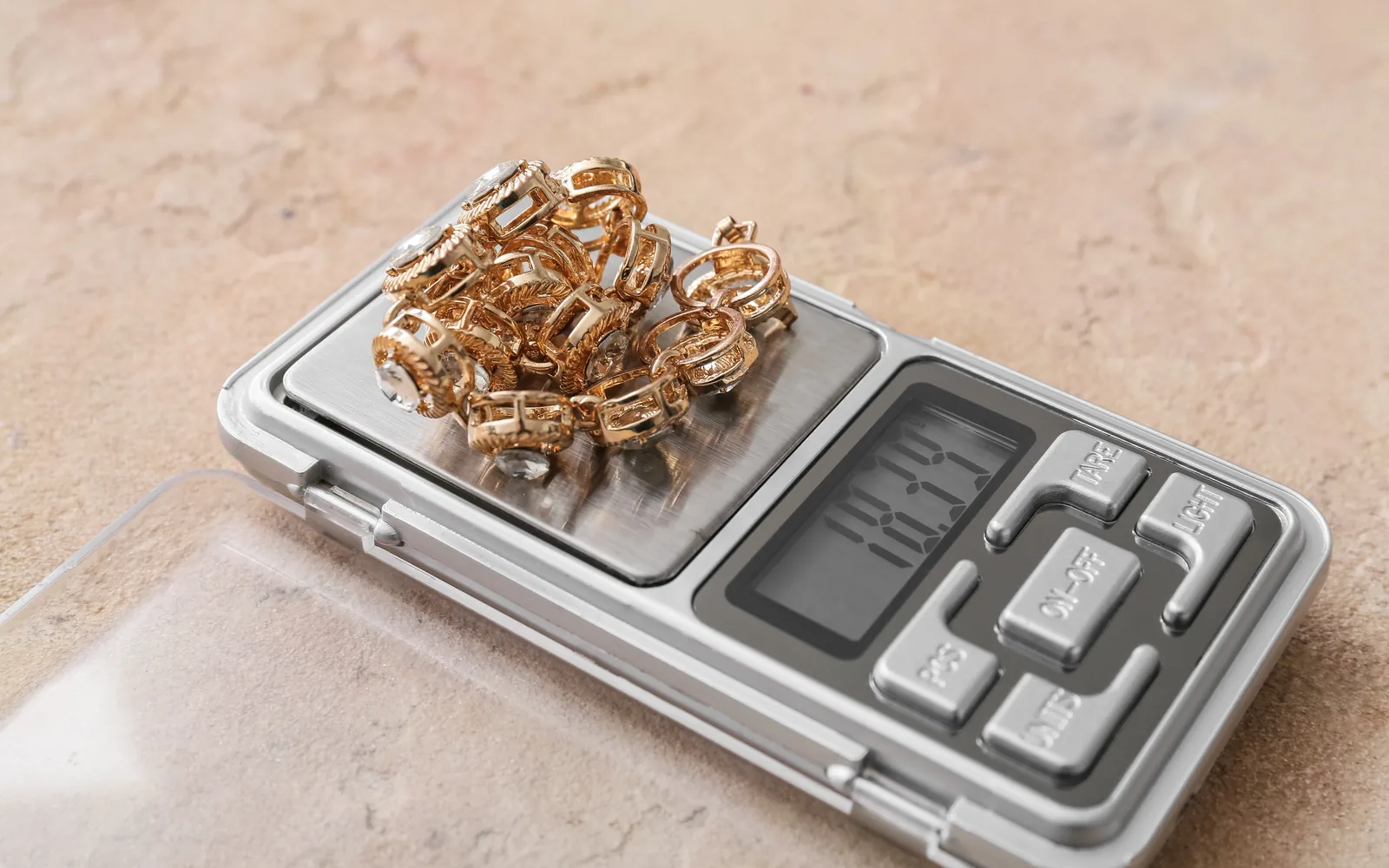
Two things decide what gold is worth as metal: how much of it there is, and how pure it is. Everything after that is a conversation.
That is why a heavy 10k bracelet can be worth more than a fine 18k chain, and why nobody honest will give you a number over the phone. It is also why the shape it is in does not matter. Broken, bent, knotted, missing its partner — the gold is still the gold. What happened to the piece did not happen to the metal.
What is not gold
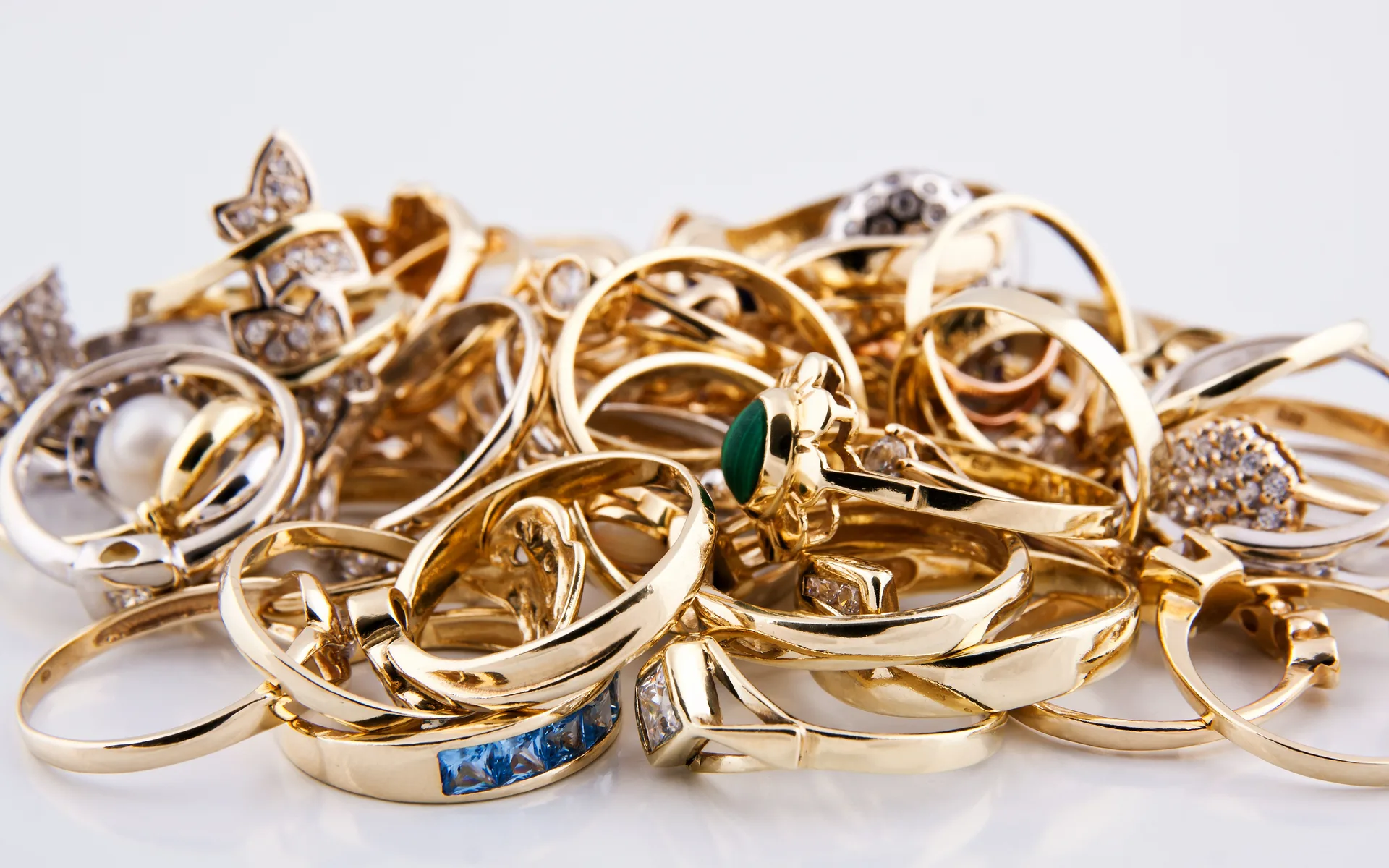
Not everything in the box belongs on the scale. Diamonds and colored gems are valued on their own, and sometimes they are the most valuable thing in the tray. Clasps, spring rings and earring backs are often a different metal entirely. So are the steel pins in a watch band and the workings inside a brooch.
None of that is a problem. It only means a box is rarely one thing, and the honest way through it is piece by piece, in a sorting tray, in front of you.