Product Details
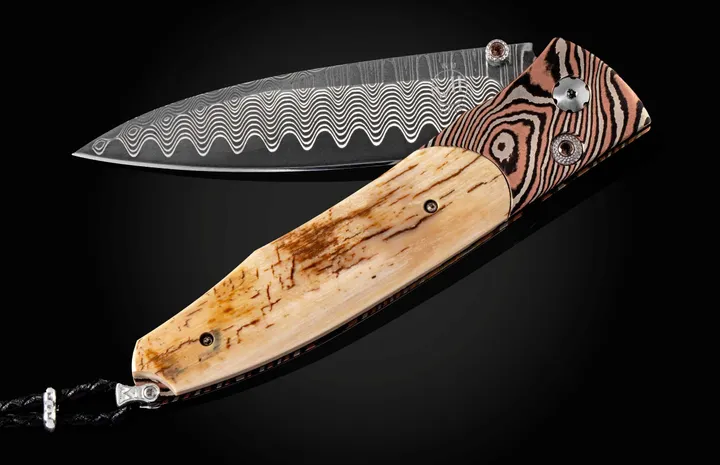
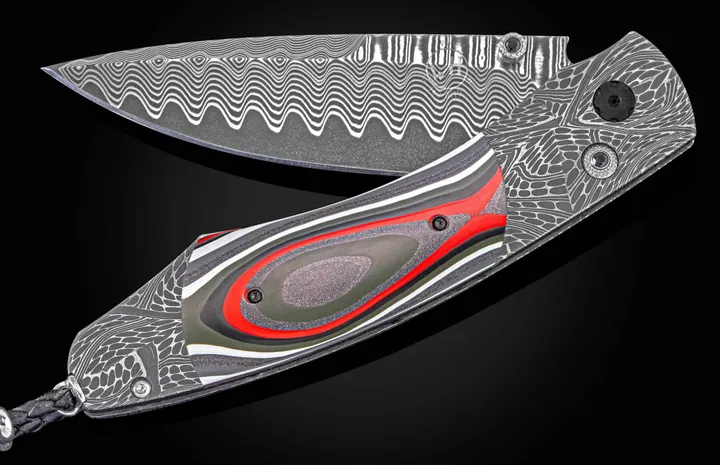
The Gentac ‘Eventide’ features a beautiful frame in hand-forged 'Twist' mokume gane, inlaid with bark, or outer section, of a 10,000 year-old fossil Woolly Mammoth tusk . The blade is 'Wave' damascus steel with a VG-10 core; the one-hand button lock and the thumb stud are set with smoky quartz gemstones. An exceptional design that offers rigorous performance in a sleek, comfortable knife, the Gentac is also the perfect canvas to showcase William Henry’s range of exotic materials and techniques. The ‘Eventide’ features some of the exotic materials and forged metals that are the hallmark of William Henry's collections; a distinctive personality statement to be worn and used for a lifetime.
Style B30 EVENTIDE
Materials
Fossil Mammoth Tusk
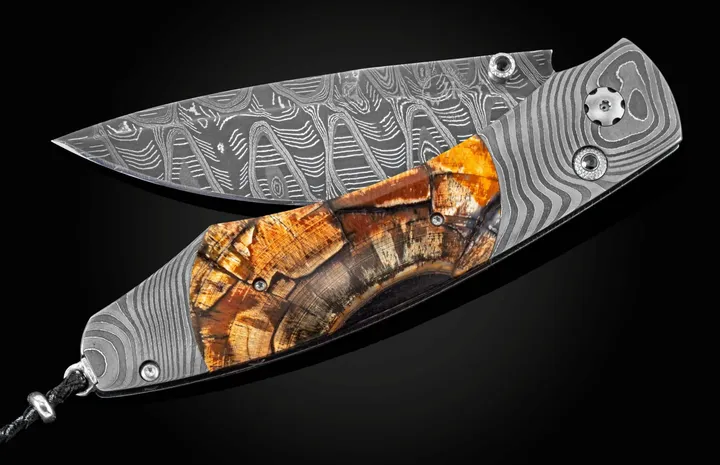
Literally the ring section of the fossil tusk of a Woolly Mammoth that walked the Earth at least 10,000 years ago. Modern humans coexisted with woolly mammoths during the Upper Paleolithic period when they entered Europe from Africa between 30,000 and 40,000 years ago. Prior to this, Neanderthals had coexisted with mammoths during the Middle Paleolithic and up to that time. Woolly mammoths were very important to Ice Age humans, and their survival may have depended on these animals in some areas. The woolly mammoth is the next most depicted animal in Ice Age art after horses and bisons, and these images were produced between 35 and 11.500 years ago. Today, more than five hundred depictions of woolly mammoths are known, in media ranging from carvings and cave paintings located in 46 caves in Russia, France and Spain, to sculptures and engravings made from different materials. William Henry's fossil Mammoth tusk is harvested in Alaska and Siberia, often from underwater. It is a rare and mesmerizing material, a living testimony of the dawn of Mankind.
Mokume gane
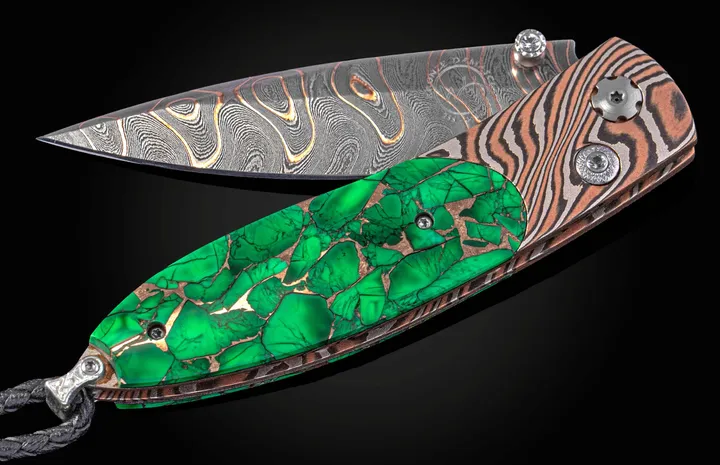
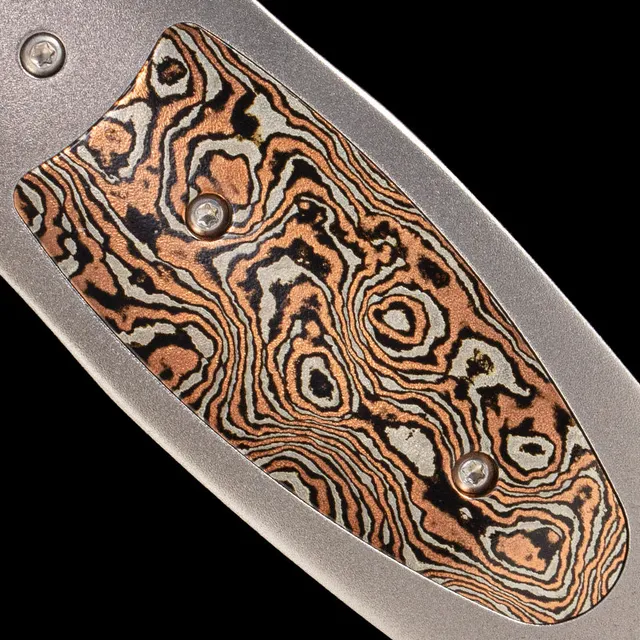
Mokume gane was developed in the 1600s in Japan, allegedly by an Akita prefecture metalsmith named Denbei Shoami (1651 to 1728). He used the mokume gane technique to dress up samurai swords. The mokume gane technique involves fusing several layers of different metals, and artistically exposing sections of lower layers. The metal is often made to display a pattern that mimics wood grain. A variety of metals can be used to give different arrays of coloration. Layers of metal are pressed together and fused with heat. The forged layers are carved to expose lower layers and are then pressed again. The carving and pressing is repeated to develop the pattern. Today, some of the finest mokume in the world is made in the USA, and William Henry is proud to offer a range of this material on its collections. William Henry's mokume is generally made with copper, brass, and nickel silver in either a 45 or 89 layer billet, forged and patterned by hand.
VG10 Damascus
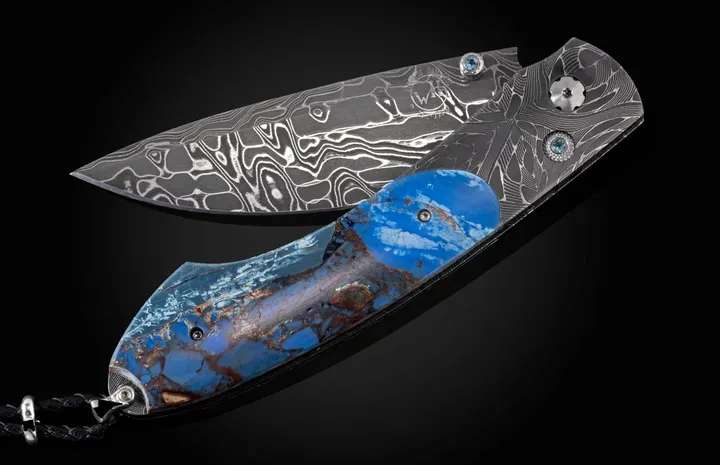
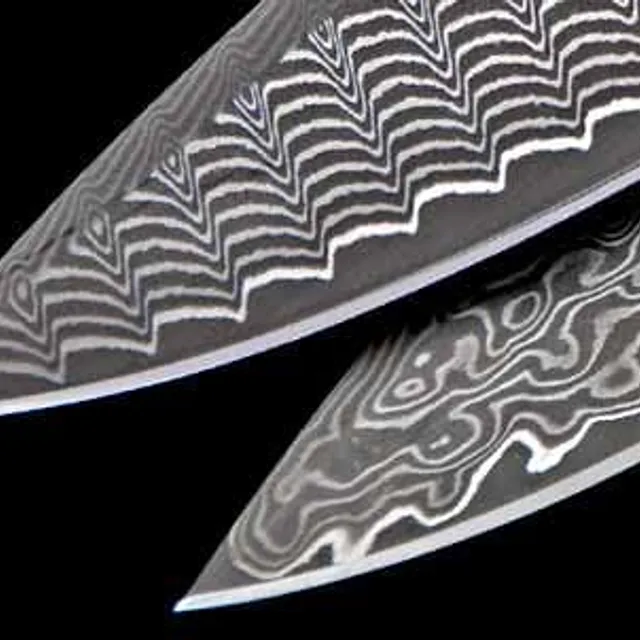
William Henry’s VG-10 damascus is created from billets with 67 layers of three different alloys. The center, or core, features premium VG-10 stainless steel tempered to an optimal hardness of HRC 60-61 for exceptional sharpness and wear resistance. The core is sandwiched between 33 layers of alternating nickel and steel which William Henry uses for tensile strength thru the blade, and to reveal the remarkable forged patterns within the composite alloys in the finished piece of steel. William Henry's final acid etch and hand-polish reveals the tapestry within, as each alloy reacts to the acid and emerges in contrasting tones of black, gray, and silver. Each unique pattern is created by different forging dies used on each sandwiched billet of steel.
Features & Specs
Features
- One-hand button lock system
Dimensions
- Blade3.25" (82.5mm)
- Handle3.80" (96.5mm)
- Overall open7.00" (177.8mm)